Vision Not Victim
As I looked at the lengthy spreadsheet displayed on my computer, I was almost overwhelmed by the amount of text staring back at me. I’d been working on creating and editing subtitles for some new footage that day while I was interning at the International Rescue Committee (IRC), a nonprofit organization providing health care, infrastructure, learning, and economic support to people in 40 countries, with special programs designed for women and children. I let out a sigh as I continued the long process and selected the next piece of footage to edit.
A young and well-spoken Syrian girl named Wissam appeared before me, her mother
by her side. As I listened closely to follow her Arabic while reading the English translation on the spreadsheet, the young woman suddenly stopped mid-sentence. Confused, I wondered for a second whether I had paused the clip accidentally on my keyboard, but when I looked back at the footage to make sure, I realized that she was simply preparing herself emotionally for what she was about to say.
At 15 years old, Wissam is one of an estimated 120,000 people who have fled from their homes in Syria to become refugees displaced by an ongoing civil war. The effects of the conflict in the region were one of the topics that I focused on while interning at the IRC. During my internship, I also researched and produced content about the recent Ebola epidemic in West Africa, the 2015 earthquake in Nepal, and the current humanitarian crisis in the Central African Republic. However, after expressing my deep passion for issues related to women and girls, I was given the opportunity to work on an inspiring project.
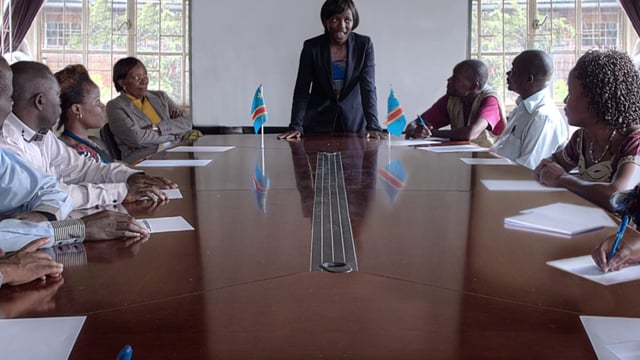
Vision Not Victim is an initiative of the IRC that asks girls to answer a simple question – what do you want to be when you grow up? While this question might sound simple, it’s a much more complicated one for the girls it’s been created for. The program was piloted in eastern Democratic Republic of the Congo (DRC), where they were paired with mentors from their community to develop a strategic plan for achieving their professional goals. Later, they designed and directed their own photo shoots, posing as their future selves, having achieved their goals. After the project was successful in the DRC, it was moved to Jordan, an area where many Syrian refugees like Wissam are now living.
A short documentary on how Vision Not Victim affected these young women in Jordan was created, and I assisted the project’s photographer and the video editor during the post-production process.
My tasks included organizing and archiving footage, curating the photos of these girls, and screening their interviews.
As I now watched Wissam’s interview and saw the tears start to roll down her cheeks, I couldn't look away. She passionately talked of how a civil war in her country had forced her to replace her dreams of what she would do with her life with worries of how she and her family would now survive. Through my role on this project, I listened to several stories like Wissam’s and also heard the girls talk about how Vision Not Victim had given them an outlet to finally start thinking of their futures again, to start dreaming again, even while in dire circumstances. While I wasn’t able to speak to these girls directly (and I wish so much that I could have), I became a witness to their happiness in the process of working on this project and opened myself up to perspectives on their issues which I had never thought of before. I also got to edit a short teaser trailer for Vision Not Victim, which you can view below.
I’m so happy I was able to contribute to this project and hope that its newest video installment will bring these girls the attention and awareness they so desperately need and deserve.